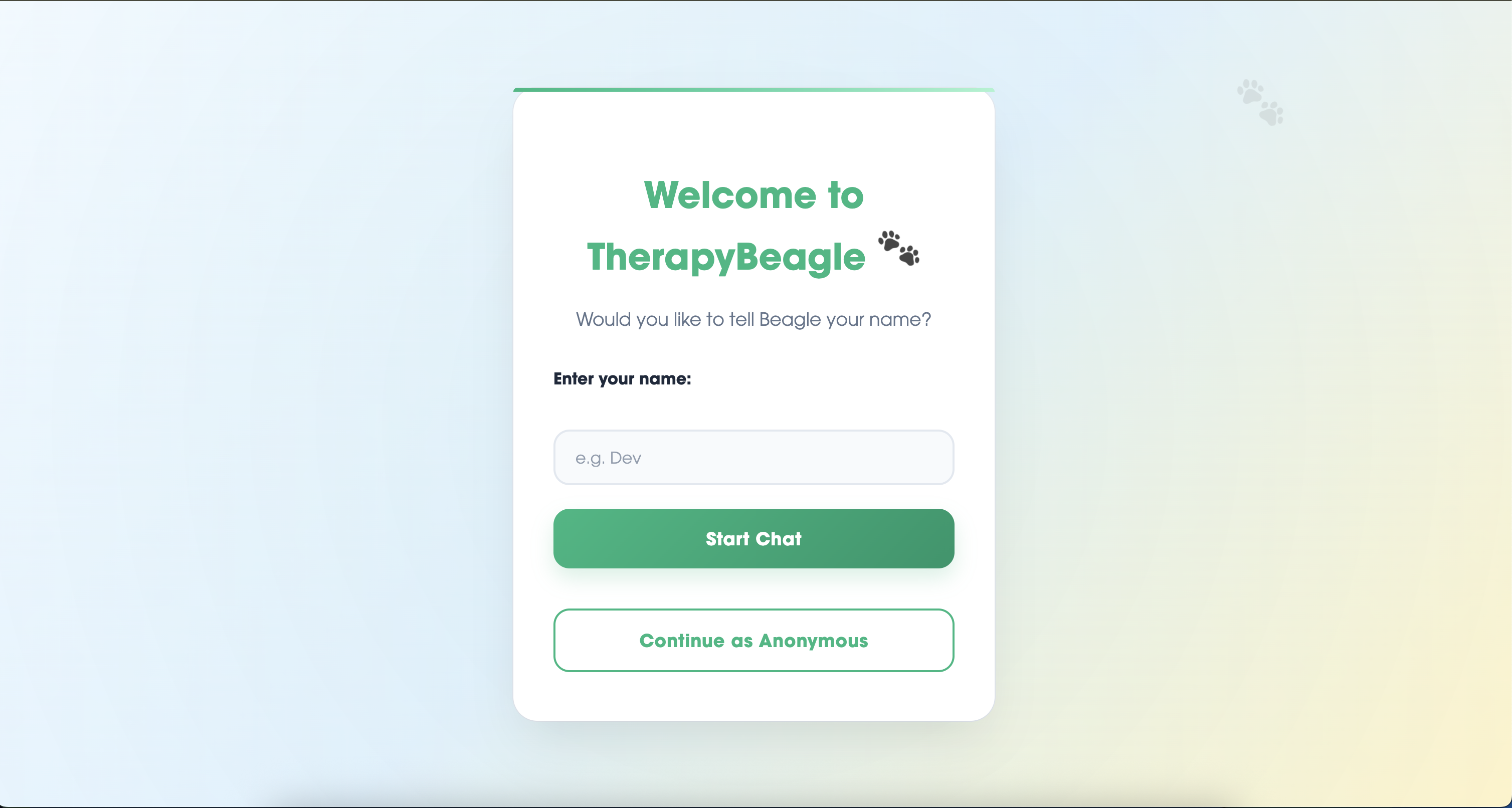
The first interaction asks permission, not questions.
Introducing emotional slowness into digital companionship
Prototype demo: local-first conversations with intentional pacing.
The interfaces demanded efficiency. The prompts felt clinical. Nobody wanted another productivity tool—they wanted to feel heard.
Most AI chatbots optimize for speed and engagement metrics. Therapy Beagle challenges this by introducing emotional slowness and care into digital interactions.
Research signal
"It feels transactional"
Existing tools treated emotional check-ins like todo lists
"I don't trust where this goes"
Nobody knew what happened to their vulnerable thoughts
"It rushes me"
Apps pushed for quick responses, but feelings don't work on a schedule
Principle
Everything runs locally using LLaMA 3 through Ollama. No cloud servers. No data collection. Your conversations stay on your device.
This wasn’t just about privacy. It fundamentally changed what the tool could be. Without engagement metrics to optimize, I could design for slowness instead of retention.
The first interaction asks permission, not questions.
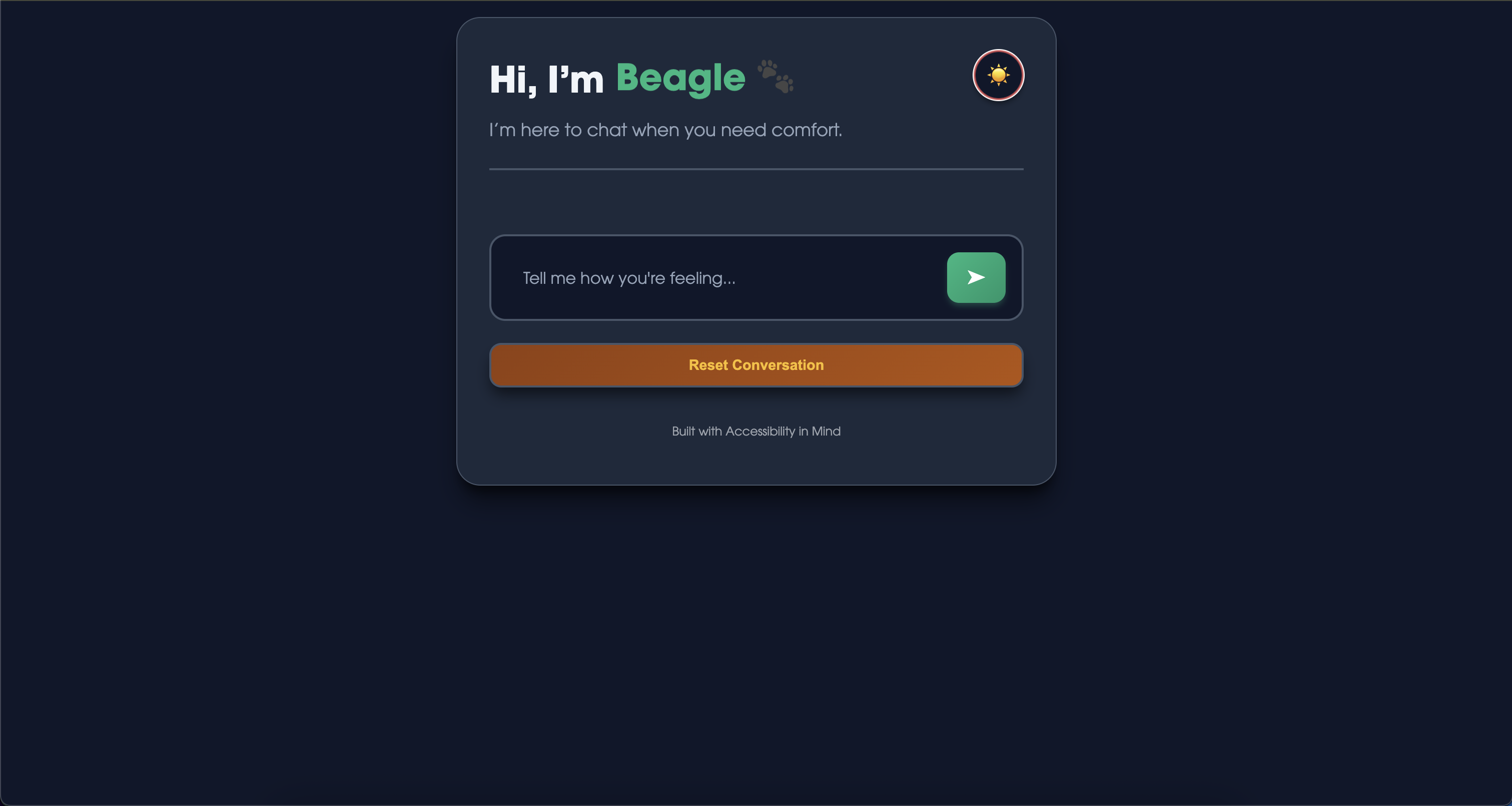
A calm “nothing required” state, designed to reduce urgency.

Instead of optimizing for speed, Therapy Beagle introduces pacing: gentle pauses, slower prompts, and space to reflect.
The goal is not to “solve” feelings, but to help you stay with them long enough to understand them.
"This is the first time an app didn't make me feel like I was doing emotional health wrong."
— Student tester, after using prototype for one week
A state-based flow that prioritizes presence, privacy, and permission to disengage — with Care Settings accessible from anywhere.
Permission, not prompts.
Conversation with pacing. Silence allowed.
Private memory — revisit, edit, delete.
No guilt. No streak loss. Returning is optional.
Talked with students and creatives about why journaling apps and chatbots felt clinical, rushed, or unsafe.
Committed to local-first privacy and emotional pacing. No engagement loops, no cloud, no “optimize for retention.”
Designed a calm interface with intentional pauses, low-demand UI states, and gentle openings that ask permission.
Shared working builds with peers and observed where pacing helped, where it frustrated, and what felt most “safe.”
Refined tone, timing, and layout. Reduced cognitive load and made “no response needed” states feel intentional.
I shared prototypes with fellow students and creatives. The feedback revealed where I'd gotten it wrong—and right.
What changed after testing
“I actually stayed in the conversation longer because it wasn’t rushing me to insights.”
— Student tester
A working local-first prototype that treats slowness as an interaction pattern, not a mood.
Therapy Beagle demonstrates how care, privacy, and pacing can be designed as system-level constraints rather than surface-level tone. By removing engagement metrics, cloud storage, and urgency-driven feedback loops, the interface creates space for reflection without demanding productivity or emotional performance.
If continued, the next phase would focus on longer-term use, configurable pacing, and clearer boundaries around what the system should never do — including moments where silence or non-response is the correct behavior.
Therapy Beagle is both a working system and a provocation. It asks: what if more digital tools were designed for human flourishing instead of engagement metrics?